
If you’ve been hurt in a slip and fall, trip and fall, or another premises liability case, you might hear a frustrating phrase from the insurance company or defense lawyer:
“The danger was open and obvious.”
This legal defense has been around for decades and is one of the most common strategies property owners use to avoid paying victims. But what does it really mean? And just because something was visible, does it mean you don’t have a case?
In this guide, we’ll break down the open and obvious defense, explain how it works in Texas, and show how an experienced attorney like Eric Kirkpatrick can fight back when insurers try to use it against you.
What Does “Open and Obvious” Mean?
The open and obvious defense is rooted in the idea of personal responsibility. If a hazard was so clear and visible that any reasonable person would have seen it and avoided it, the property owner argues they shouldn’t be held liable for your injury.
Example:
- You trip over a large hole in broad daylight, right in front of you. The property owner may claim you should have seen the danger and walked around it.
On the surface, this seems straightforward. But in reality, courts recognize that life is more complicated. People get distracted, lighting isn’t always good, and sometimes hazards can’t reasonably be avoided—even if they are technically visible.
Why Property Owners Love This Defense
Insurance companies and defense attorneys push the open and obvious defense because:
- It can shut down a case early before trial.
- It shifts blame onto the victim instead of the property owner.
- It allows them to argue comparative negligence (that you share fault for your own injuries).
But just because they raise this defense doesn’t mean your case is over.
How Texas Law Treats the “Open and Obvious” Rule
Texas courts have narrowed and clarified how this rule applies. The key issue is foreseeability.
- If the property owner could reasonably foresee that someone would be injured—even by an obvious hazard—they may still have a duty to fix it.
- If the danger was unavoidable (for example, the only exit was blocked by water on the floor), the defense doesn’t hold up.
In other words, visibility alone isn’t enough to let a property owner off the hook.
Real-Life Examples of the Defense
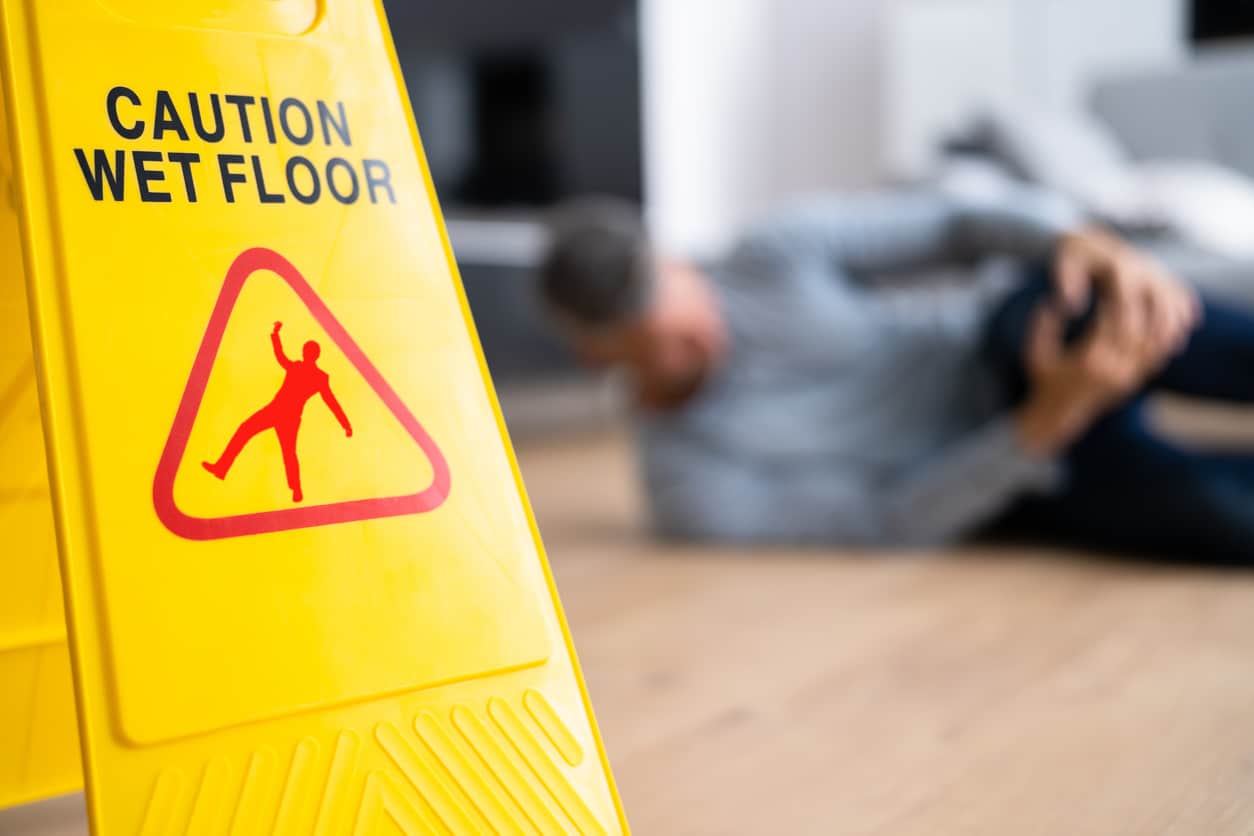
- Slip on a Wet Floor:
- Defense argument: The puddle was large and clearly visible.
- Counter: Lighting was poor, and the puddle was near the only path to the restroom.
- Broken Step on a Staircase:
- Defense argument: The broken step was obvious to anyone looking down.
- Counter: People don’t expect dangerous stairs, and tenants had complained for months with no repairs.
- Parking Lot Pothole:
- Defense argument: It was broad daylight, and the pothole was huge.
- Counter: The pothole was in a high-traffic area where avoiding it was nearly impossible.
The Role of Comparative Negligence
Texas applies modified comparative negligence. That means:
- If you are less than 51% at fault, you can still recover damages (but they’re reduced by your percentage of fault).
- If you are 51% or more at fault, you cannot recover anything.
Example: A jury finds you 30% at fault for not noticing a spill but holds the store 70% at fault for failing to clean it. Your $100,000 verdict would be reduced to $70,000.
Insurance companies use the open and obvious defense to try to increase your percentage of fault.
Exceptions to the “Open and Obvious” Defense
Even when a hazard is visible, Texas courts recognize several exceptions where the property owner may still be liable:
- Unavoidable Hazards – If the hazard blocks an essential path (like the only entrance or exit).
- Distraction Doctrine – People can be reasonably distracted, especially in places like grocery stores where they’re expected to look at shelves, not floors.
- Foreseeable Harm – If the property owner could foresee that even a visible hazard would likely cause harm.
- Children & Vulnerable Populations – Kids, the elderly, or disabled individuals may not perceive hazards the same way.
Strategies Lawyers Use to Challenge the Defense
An experienced attorney like Eric Kirkpatrick knows how to dismantle the open and obvious defense. Strategies include:
- Demonstrating Poor Lighting or Visibility – Photos and witness statements showing conditions made the hazard harder to see.
- Highlighting Lack of Alternatives – Proving the hazard was unavoidable.
- Showing Owner Negligence Over Time – Maintenance logs, repair requests, or prior complaints that prove the hazard was long-standing.
- Establishing Foreseeability – Arguing the owner knew or should have known harm was likely.
Evidence That Helps Your Case
If you’re injured in a premises liability accident, gather as much evidence as possible to counter the open and obvious defense:
- Photos or videos of the hazard (from the time of the incident).
- Witness statements confirming poor visibility or lack of warnings.
- Incident reports filed with management.
- Medical records linking your injuries to the hazard.
- Maintenance records proving negligence.
Common Myths About the Defense
- Myth: If the hazard was visible, I can’t win.
- Truth: Courts often side with injured victims when property owners failed to act reasonably.
- Myth: I was looking at my phone, so I have no case.
- Truth: Comparative negligence may reduce your recovery, but it doesn’t eliminate your claim.
- Myth: Businesses don’t have to fix obvious dangers.
- Truth: They may still be liable if harm was foreseeable.
Frequently Asked Questions
No. Courts balance visibility with foreseeability and reasonableness.
Distraction is recognized in many cases as a reasonable factor.
No. Children are held to a different standard under Texas law.
Typically two years from the date of the accident.
Why You Need an Attorney
Insurance companies know how powerful the open and obvious defense can be. Without legal help, they may convince you your case has no value. But with an experienced lawyer, this defense can often be challenged successfully.
Eric Kirkpatrick and his team know how to investigate property conditions, gather evidence, and prove that a visible hazard was still dangerous and preventable.
Conclusion: Don’t Let “Open and Obvious” Close the Door on Your Case
Just because a hazard was visible doesn’t mean you’re out of options. Texas law recognizes that life isn’t always black and white—and that property owners can’t ignore safety just because a danger can be seen.
If you’ve been injured in a slip, trip, or fall and the insurance company is trying to dismiss your case as “open and obvious,” don’t give up. Call Eric Kirkpatrick for a free consultation and find out how to fight back.